



São Paulo is, by far, Brazil's capital of flexible work. It's also the city with the largest number of coworking spaces in the country, over 1,100 locations, according to the 2024 Coworking Census by Woba, which mapped the sector across Brazil (Terra's report on the 2024 Coworking Census).
). If you're a digital nomad, freelancer, or remote professional moving to São Paulo or you already live here and want to get out of your home office, this guide is designed to help you understand how the market works, which neighborhoods make sense to consider, and how to choose a coworking space that truly fits your routine.
More than just a list of addresses, the goal here is to show the criteria that actually make a difference when deciding and why more and more remote professionals are choosing to combine accommodation and workspace in a single place, instead of solving the two problems separately.
What is coworking, and why does São Paulo lead this market?
Coworking is a shared workspace model with ready-made infrastructure (internet, furniture, meeting rooms) and flexible plans that can range from a single day pass to a monthly private office. The idea is simple: you pay for what you use, without the commitments of a traditional office lease, security deposits, renovations, your own furniture, multi-year contracts.
São Paulo has the highest density of coworking spaces in Brazil for a direct reason: it's the country's main economic hub, with the largest concentration of corporate headquarters, startups, and high-end independent professionals. The 2024 Coworking Census also showed that the sector grew by around 30% in number of units between 2023 and 2024, a sign that demand for flexible spaces keeps expanding, even amid some companies' return to in-person work.
That partial return to the office, in fact, helps explain why coworking makes sense today: recent surveys show that a large share of in-office professionals would like to move to hybrid or remote models and coworking is the middle ground between the two realities, offering professional infrastructure without tying anyone to a fixed office.

Who benefits from a coworking space in São Paulo?
Although the most common image is that of a digital nomad with a laptop and backpack, the coworking audience in São Paulo is broader than it seems:
- Digital nomads and international freelancers, who stay in the city for a few weeks or months and need a professional work address without red tape.
- Remote professionals from companies outside São Paulo, who relocate temporarily to the city for work or personal reasons.
- Consultants and service providers, who need a space to meet clients and make a good impression, without keeping a fixed office year-round.
- Small growing teams, that aren't yet ready to sign a traditional office lease.
- Executives on business trips, who combine short or medium-term stays with workdays outside the hotel.
If your situation involves a business trip with a longer stay, it's worth pairing this read with our guide on corporate housing in São Paulo and the reasons to choose a furnished flat, which covers exactly the logistics of coming to the city for business.
Which neighborhoods are most sought after for coworking in São Paulo?
Location is probably the most important criterion, even more than price. A coworking space far from where you live means time lost commuting every day, which is especially critical in a city the size of São Paulo.
he neighborhoods most sought after for coworking tend to overlap with the city's most strategic areas for professionals in general: Paulista, Consolação, Vila Olímpia, Itaim Bibi, and Jardins have the largest concentration of shared workspaces, precisely because they combine infrastructure, transport, and proximity to major companies. We've already explored this topic in more depth in our article on the most strategic neighborhoods for executives in São Paulo, which helps clarify the differences between these areas.
The Paulista and Consolação area, for example, has the advantage of being at the city's geographic and transportation center, with quick access to the subway, buses, and the main corporate corridors, one of the reasons it concentrates so many coworking spaces and flexible offices.
How to choose the ideal coworking space?
Not every coworking space suits every professional profile. Before committing to a plan, it's worth evaluating these points:
Location and access
Check the distance from where you live (or will live), proximity to subway stations, and how easy it is to get around during peak hours in São Paulo, this can mean the difference between a 15-minute commute and one that takes over an hour.
Real infrastructure, not just what's in the photos
Stable high-speed internet, meeting rooms equipped with video conferencing, air conditioning, natural light, and acoustic comfort make a real difference day to day, far more than the space's decor.
Plan flexibility
Check whether the space offers day passes, monthly plans, and dedicated desks, or whether it requires a longer minimum commitment. Anyone just passing through the city needs contractual freedom.
Community and networking
Spaces with an active community of professionals and networking events tend to add more value than simply a desk and wi-fi, especially for those building a network of contacts in a new city.
Cost-benefit compared to alternatives
Compare the cost of a coworking space with keeping your own office or working from cafés and hotels. In most cases, professional coworking ends up cheaper and more productive than these informal alternatives.
Living and working in the same place: Why does combining housing and coworking make sense?
For those coming from elsewhere, whether from another state, another country, or even another neighborhood in the same city, splitting the search for temporary housing and the search for a workspace into two separate processes tends to create unnecessary headaches: two contracts, two different locations, two daily commutes.
That's why the flex living, combining short- or medium-term furnished accommodation with access to an integrated coworking space has been gaining ground among remote professionals in São Paulo. If you're still deciding between a traditional rental contract and a more flexible stay model, the article Short Stay vs. Traditional Rental in São Paulo: Which One Should You Choose? breaks down the practical differences between the two formats.
Vertical Coworking: Feel Sampa's workspace in Consolação
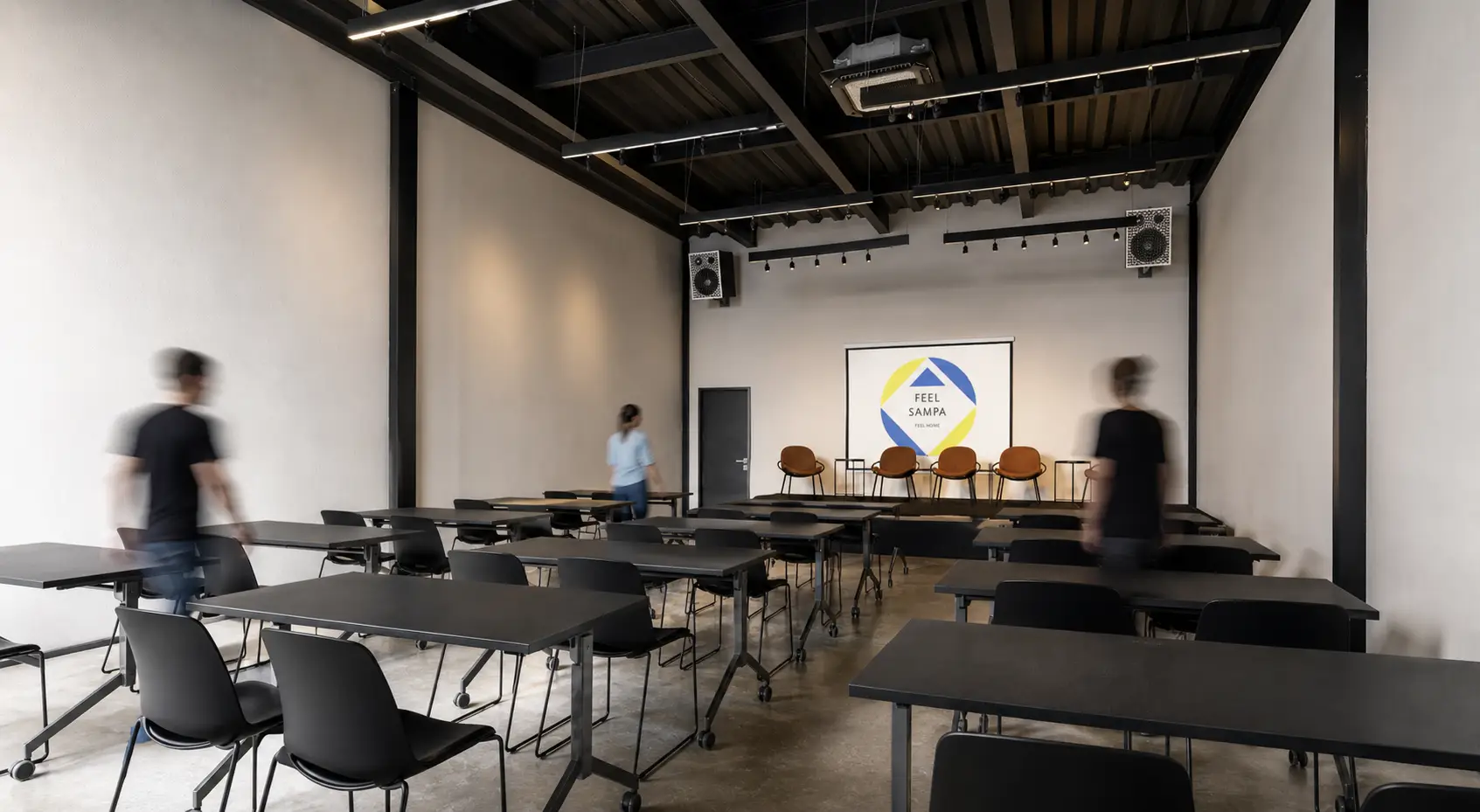
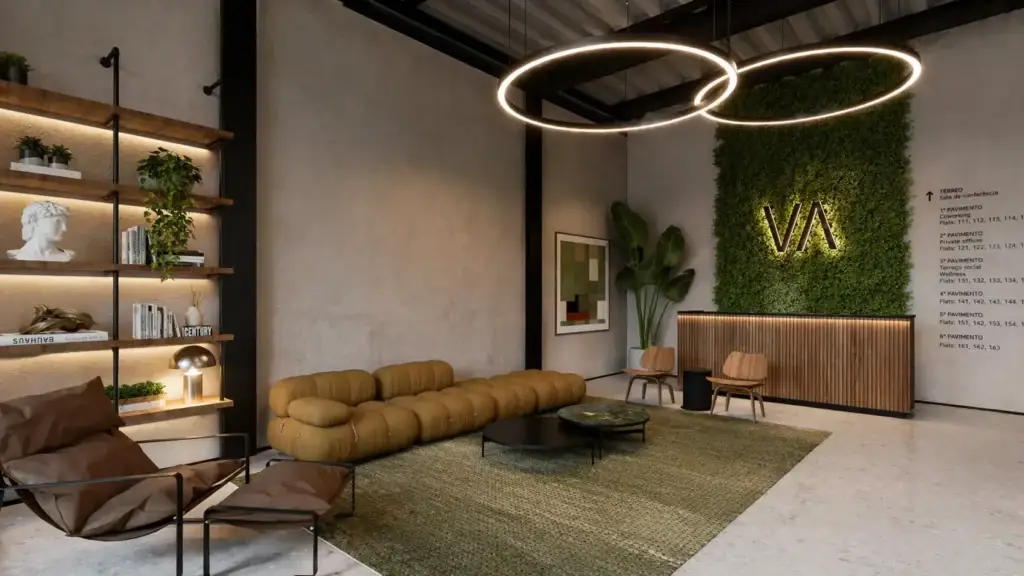
Feel Sampa operates Vertical Coworking, a work hub located on Rua Matias Aires, in the Consolação neighborhood, a five-minute walk from Avenida Paulista and close to the city's main business centers.
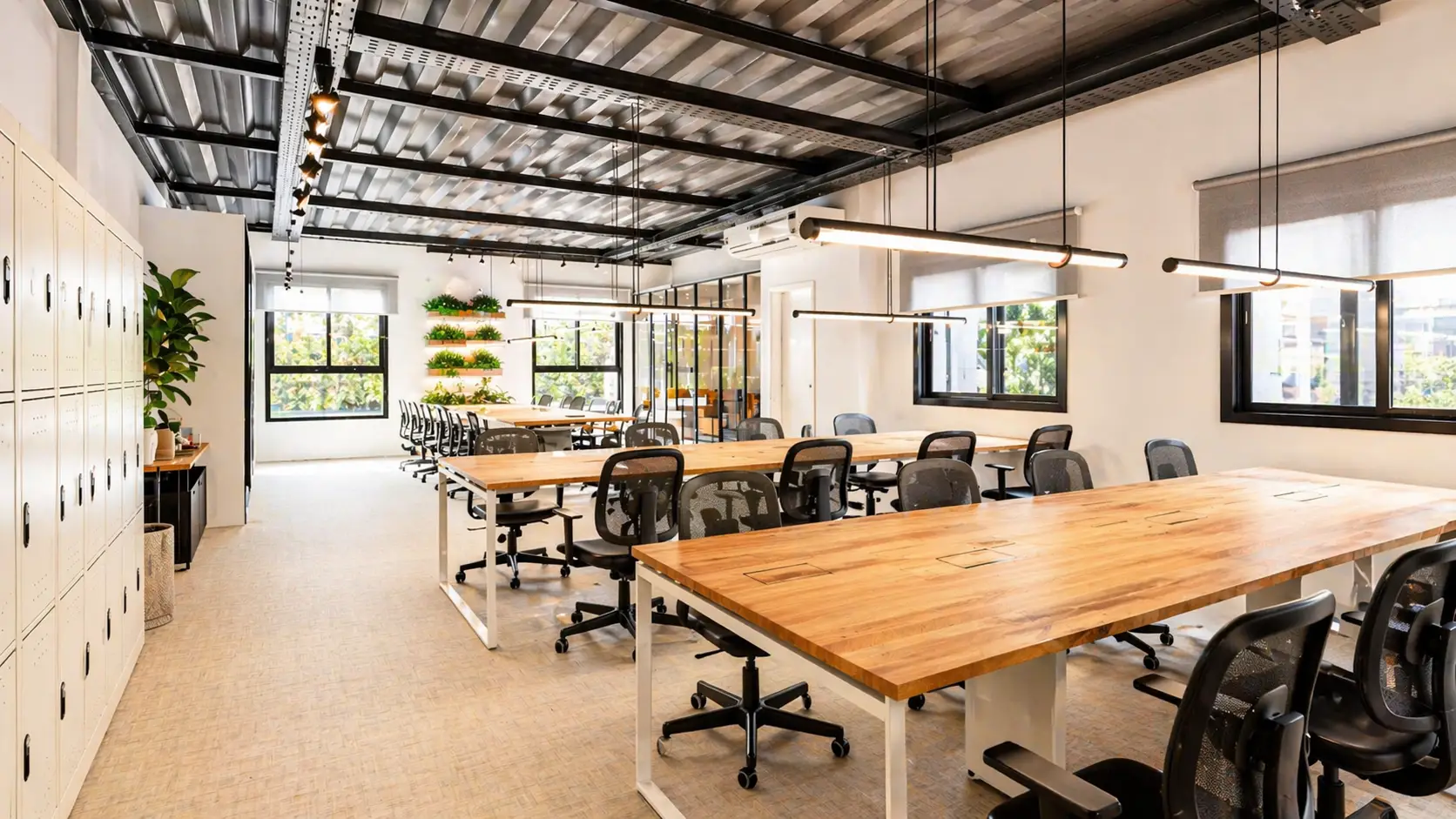
The space was designed specifically for the profile of remote professionals and business travelers: besides private offices (from 4 to 12 seats), meeting rooms equipped with video conferencing, dedicated desks with individual lockers, and a virtual office with a business address. Vertical Coworking offers high-speed wi-fi, its own café, a rooftop with a view, and a fitness area, with 24-hour access for monthly members.
The biggest advantage is the direct integration with Feel Sampa's residential flats in the same building: guests staying with Feel Sampa can work just steps from home, without relying on commuting or separate housing and office contracts. It's the flex living model applied in practice, living and working in the same building, with the flexibility that remote work demands.
Frequently asked questions about coworking in São Paulo
How much does a coworking space cost in São Paulo?
Prices vary considerably depending on the neighborhood, the type of plan, and the infrastructure offered. Single day passes tend to start at affordable rates, while private offices for small teams start, on average, at R$4,000 to R$4,500 per month in central, well-equipped locations such as Paulista and Consolação.
What's the difference between coworking and a virtual office?
Coworking offers a physical workspace, with desks, meeting rooms, and infrastructure for in-person use. A virtual office, on the other hand, provides only a business address and mail management, without regular physical use of the space, many coworking spaces, including Vertical Coworking, offer both options.
Do I need a long-term contract to use a coworking space?
Not necessarily. Most coworking spaces in São Paulo work with flexible plans, ranging from single day passes to monthly subscriptions with no long-term commitment, one of the main advantages of this model compared to a traditional office lease.
Is coworking a good option for someone just passing through São Paulo?
Yes. For digital nomads and professionals on short or medium stays, coworking avoids the commitment of a fixed office lease and provides immediate professional infrastructure. When combined with accommodation in the same location, as in Feel Sampa's model, it also eliminates commuting time between home and work.
Which São Paulo neighborhoods have the most coworking options?
Paulista, Consolação, Vila Olímpia, Itaim Bibi, and Jardins have the largest share of the market, thanks to their infrastructure, public transport, and proximity to the city's business and financial hubs.
Is it worth combining accommodation and coworking in the same place?
For those coming to São Paulo from elsewhere for work, yes. It reduces the logistics of managing two addresses, eliminates daily commutes, and tends to work out cheaper than renting accommodation and an office separately.
Work and live in the same place with Feel Sampa
If you're planning a stay in São Paulo and need a place to live and work without complications, check out Feel Sampa's Vertical Coworking, in Consolação: private offices, dedicated desks, fully equipped meeting rooms, and complete infrastructure, just steps from our furnished flats. Talk to our team and put together the ideal accommodation and work plan for your time in the city.